
Set the Union Blotter Date Range
Search newest first, oldest last. The arresting agency comes first in line. Then try the county request channel. After that, turn to dated news reporting that fills the county gaps. Save the event date, publication date, and publisher together. That habit keeps an old headline from posing as fresh Union County news. If a later court record conflicts with early coverage, trust the official disposition and keep the blotter item only as a dated account of the initial arrest.
Union County Blotter Has No Live Window
The official sheriff page posts no 72-hour, seven-day, or weekly arrest list. It states no archive depth. No removal rule appears. No posting schedule is given either. Anna, Jonesboro, and Cobden municipal sites carry no public daily log, so an empty search says little about a chosen week of Union County activity.
Define the period and the record first. A custody question goes to the sheriff, while an incident report starts with the arresting police department. A list of arrests across a date span may need a focused county request. Court outcomes live with the Circuit Clerk. Keeping these routes straight stops a blotter search from mixing police activity with jail population.
Read a Union County Arrest Entry
Labels tell you what a blotter item really is. It may be an agency report or a monthly statistical summary. It may be a news story. Or it may be a warrant notice or a court docket. Keep the publication date and event date separate. Note the arresting agency, the alleged offense, and the stated custody status. A headline date is not a booking date unless stated.
- Set an exact beginning and ending date.
- Check the source type and publisher.
- Separate incident, arrest, booking, and story dates.
- Confirm identity with more than a shared name.
- Ask the sheriff about custody and clerk about disposition.
Same-day needs fit the Arrests Last 24 Hours route. This blotter path serves a broader date span and records that persist after custody changes.
What Union Arrest Reports Show
Union County publishes no current web-blotter field list. A historical official booking report gives a local reference point, while dated news items show far fewer facts. Today's records may be redacted or structured differently.
| Record element | Meaning and limit |
|---|---|
| Name and descriptors | Identity clues that still require confirmation. |
| Agency and incident number | Points to the custodian of the report. |
| Arrest or release time | A dated event, not proof of present custody. |
| Charge as booked | An charge that can change in court. |
| Bond or bail | A recorded condition, not a conviction. |
| Photograph | Available in some records, but not guaranteed. |
Illinois law shields juvenile material. Withholding for safety or investigative reasons is permitted too. A photo can exist on file yet never appear online, and a news image from one event does not form a booking feed.
Activity Reports Fill the Blotter Gap
The Gazette-Democrat archive is the strongest recurring local-news source found. It has published sheriff monthly activity summaries and Anna Police reports. Those items may count calls, traffic stops, arrests, citations, investigations, crashes, or patrol work. They describe agency workload over a period. They are not person-by-person custody rosters.
An archived Anna Police activity report shows this monthly pattern. It helps establish when summaries appeared and which categories the agency reported, but it cannot prove every Union County arrest was included. Absence from a report is not proof that an arrest did not occur.
Visit the Gazette-Democrat archive before reviewing its captured screen.
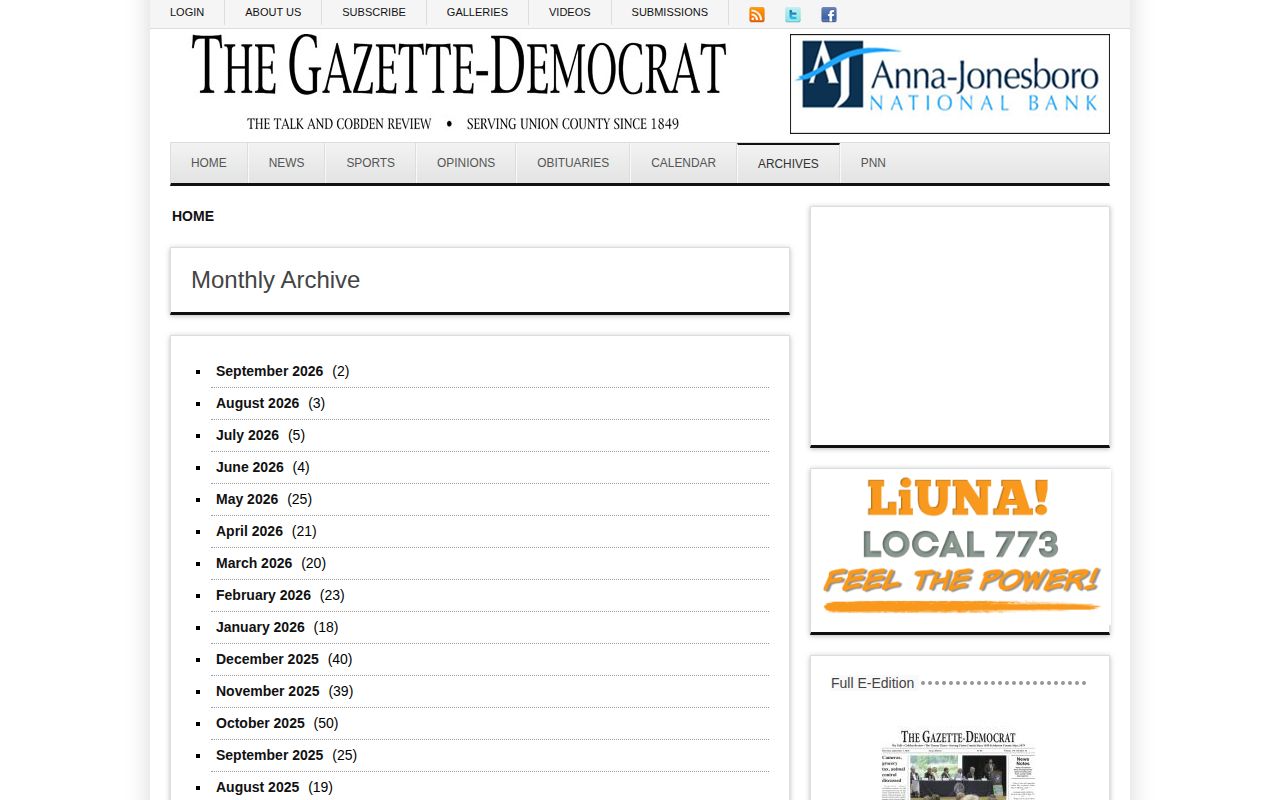
The archive organizes published coverage, not current custody. The monthly Anna report is one dated example inside it.
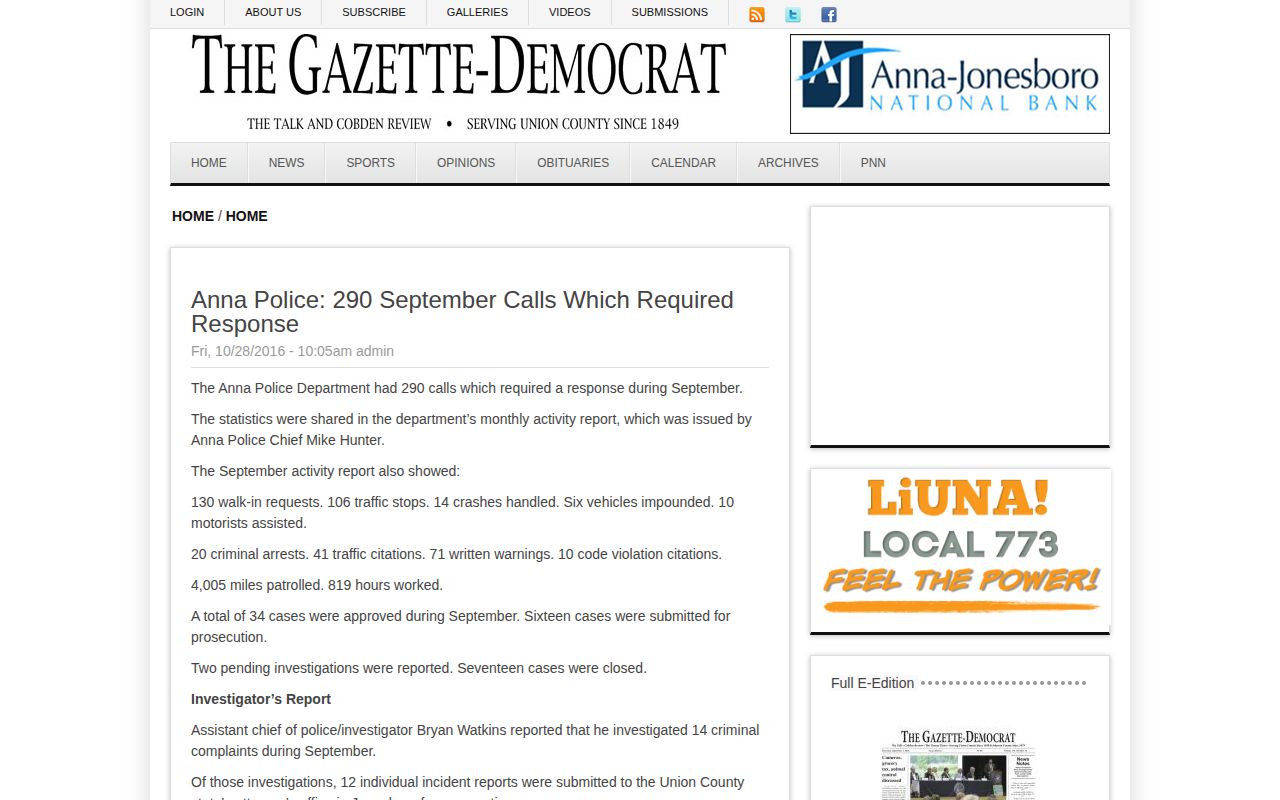
Read it as activity context, not as a current roster of who is in custody at the Union County jail.
Regional Arrest News Needs Verification
Use official routes first. The KFVS crime section, KBSI, and Withers Broadcasting sometimes cover Union County arrests, warrants, or prosecution statements in Anna, Jonesboro, Cobden, and unincorporated areas. Editors pick the notable events. None lists every booking. A Withers Union County report is one dated arrest-and-court story, and it should be read as coverage of a single event rather than a reusable roster.
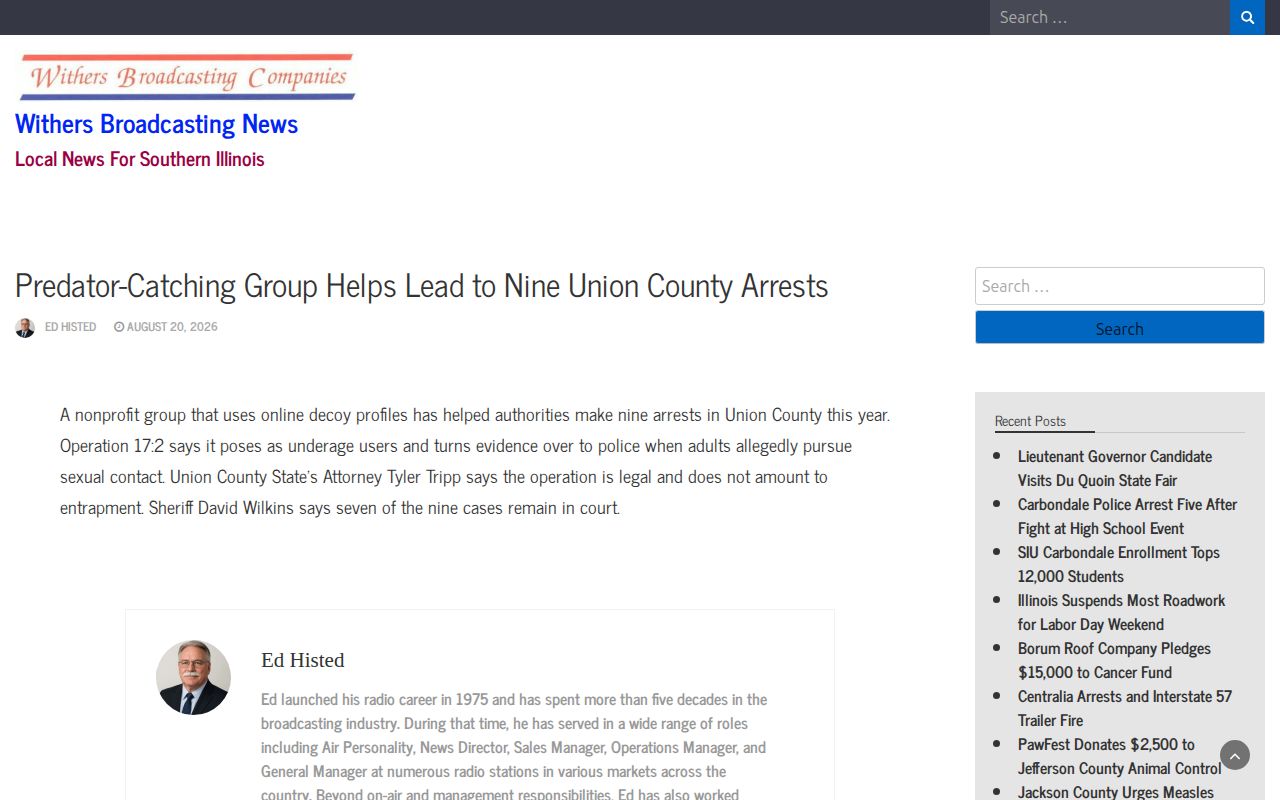
Line up news claims against the agency record. Then check the later court result. That comparison is how a Union County blotter search ends, with the official record settling what the story first reported.
Request a Dated Union Arrest Log
Union County keeps its deeper arrest history on paper, not online. The Union County FOIA route is the way in. Ask for a date-ordered arrest log. Say whether the request covers sheriff arrests only. Or state every record the office holds, or one named person's booking report. City police files can sit apart from jail records, since the arresting department keeps the incident report while the sheriff or a regional facility holds custody intake. A strong request names the date range, the arrested person if known, the agency, and where the incident took place. Request arrest and release times, charges as booked, any facility transfer, a booking number, and a booking photo if one exists. Ask which retention schedule covers the series too. No online archive depth or booking-photo fee is posted. The county form lists FOIA contacts at 309 West Market Street, Room 239, Jonesboro, IL 62952, along with ucsainfo@unioncountyil.gov and rhawk@unioncountyil.gov. Check routing before sending details. A records request pulls an existing record, not custom analysis.
Union Arrest Archives and Court Results
The sheriff publishes no retention period for booking photos, jail ledgers, release records, or roster entries. Illinois sets the rules instead. Under the Illinois Local Records Act, local agencies follow approved schedules. Ask the sheriff for the series name, the authorized retention period, and whether older material moved to an archive.
For deep history, start with the IRAD Union County page. IRAD, based at Southern Illinois University, helps identify historical record series. It does not confirm any modern booking photos. The University of Illinois, separately, catalogs a Union County sheriff collection covering 1926 to 1950. That collection offers sheriff, jail, warrant, and bail context rather than recent bookings.
For court outcomes, turn to the Union County Circuit Clerk. A blotter only captures the start of a case. The court file holds what happened after the arrest. Note: keep dates and source names attached to each entry so old material is never mistaken for current.
Search Public Records
Sponsored Results